In 2026, enterprises are not short on data—they are short on usable, trusted, real-time intelligence. Disconnected systems, manual workarounds, and fragmented reporting prevent organizations from fully leveraging AI, analytics, and personalized customer engagement.
SpiceX Data Integration solves this problem by unifying enterprise data across systems, workflows, and teams—without costly rip-and-replace projects—creating a secure, AI-ready foundation for modern operations.
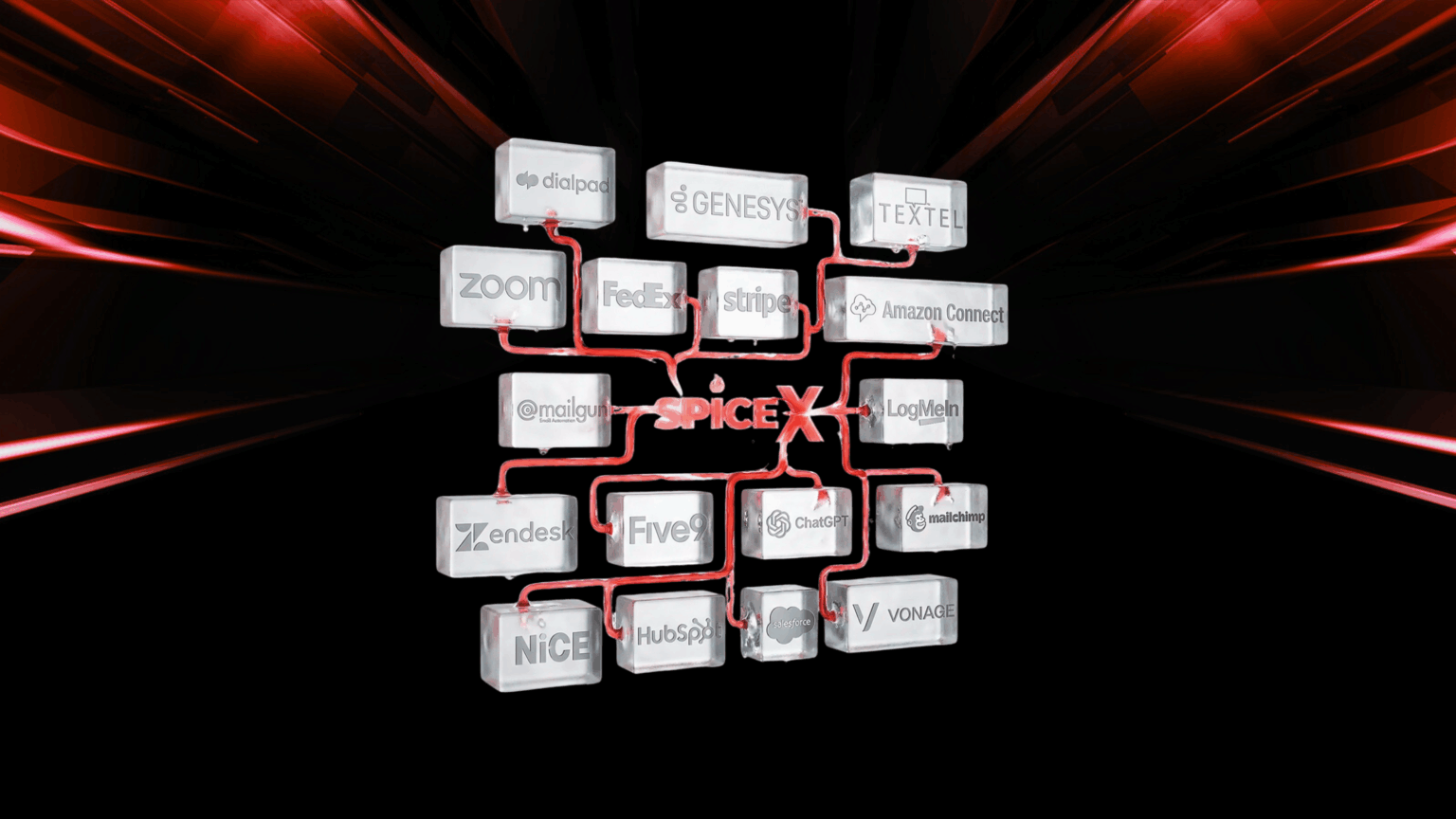
SpiceX Data Integration, defined: SpiceX is an enterprise data integration and orchestration layer that securely connects cloud, on-premises, and legacy systems, unifies data in real time, and delivers that data into workflows, dashboards, and AI tools—without replacing systems of record.
Why Enterprise Data Integration Matters More Than Ever in 2026
Modern organizations operate across dozens of platforms: CRM, ERP, contact centers, telephony, marketing automation, support systems, and legacy applications. When these systems operate in silos:
- Customers receive inconsistent or impersonal experiences
- Employees lose time switching between applications
- Leaders lack real-time, trustworthy analytics
- AI initiatives underperform due to incomplete or unreliable data
Raw data does not create value. Value comes from integration, context, and orchestration, delivered in real time and at scale.
What Is SpiceX Data Integration?
SpiceX Data Integration is enterprise-grade software that connects disparate systems—cloud-based, on-premises, and legacy—into a single, intelligent data ecosystem.
Unlike traditional integration approaches, SpiceX is designed to:
- Work with existing systems, including those with limited or no APIs
- Route data securely without exposing systems of record
- Feed clean, unified data into workflows, dashboards, and AI platforms
- Provide users with a single, unified operational view
SpiceX turns fragmented enterprise systems into a connected, secure, and intelligent operating environment.
How Does SpiceX Data Integration Work?
While every environment is different, most deployments follow a straightforward model:
- Connect to enterprise systems across departments (CRM, ERP, CCaaS, ticketing, marketing, databases, legacy apps)
- Normalize and map data so records align across platforms (customers, cases, orders, accounts, policies, etc.)
- Route data securely with controlled access, governance, and system isolation
- Automate workflows and handoffs across teams to enforce consistent processes
- Deliver unified views and AI-ready data into dashboards, analytics tools, and AI models
The result is a dependable data layer that supports both day-to-day operations and long-term modernization.
Core Capabilities of SpiceX Data Integration
1) No Rip-and-Replace Architecture
SpiceX integrates with your current technology stack—including legacy and proprietary systems—reducing the cost, risk, and disruption of replacing platforms.
2) Real-Time Data Consolidation
Data from CRM, ERP, support platforms, telephony, marketing systems, and databases can be synchronized into a more consistent, reliable operational view.
3) Unified User Interface (UUI)
Employees can access relevant customer and operational data from a single desktop experience, reducing errors and limiting application switching.
4) Workflow Automation and Orchestration
SpiceX moves data between systems, triggers actions, and supports standardized business processes across the enterprise—so teams aren’t rebuilding logic repeatedly.
5) Secure Data Routing
Sensitive systems remain protected through controlled data movement, reducing the need for direct database access and lowering security exposure.
6) AI-Ready Data Foundation
Clean, complete, contextualized data can feed analytics engines, dashboards, and AI models—supporting more accurate insights and better decision-making.
What Systems Can SpiceX Integrate With?
Most enterprises need integration across both modern and legacy environments. SpiceX is commonly used to connect:
- CRM platforms
- ERP and finance systems
- Contact center platforms and telephony
- Support and ticketing systems
- Marketing automation and customer engagement tools
- Databases, data warehouses, and reporting tools
- Legacy and proprietary systems (including those with limited API support)
This flexibility is essential in 2026, when modernization often happens in phases—not via a single platform replacement.
Business Outcomes Organizations Pursue with SpiceX
Organizations using SpiceX typically target measurable improvements across performance and operational KPIs, including:
- Faster customer service through unified agent views
- Improved CSAT and more consistent customer experiences
- Reduced average handle time (AHT) through workflow automation
- More accurate, faster multi-system reporting
- Higher data integrity through record consolidation
- Stronger governance and compliance controls
These outcomes directly support enterprise goals in customer experience, operational efficiency, and AI adoption.
Common Enterprise Use Cases
Contact Centers
Unify customer profiles, reduce handle time, and deliver consistent service through a single operational view.
Sales and Revenue Teams
Enrich CRM data in real time and improve cross-system visibility into pipeline, accounts, and customer activity.
Back Office Operations
Automate handoffs between ERP, finance, fulfillment, and support—reducing delays and manual reconciliation.
Government and Public Sector
Enable secure data sharing across departments without exposing systems of record or creating unnecessary access risk.
Highly Regulated Industries
Control data movement with auditability and compliance support—while still enabling enterprise-wide visibility.
Security and Governance by Design
SpiceX is built around enterprise security principles, including:
- Least-privilege access control
- Secure routing and system isolation
- Auditable, controlled data flows
- Reduced dependency on manual data handling
This approach helps minimize risk while enabling organization-wide accessibility to the data teams rely on.
SpiceX vs Traditional Integration Approaches
Many organizations reach a breaking point with point-to-point connections and brittle integrations. SpiceX is positioned differently:
- Point integrations often break when systems change and require repeated rebuilds
- Traditional approaches may prioritize data movement without operational orchestration
- SpiceX emphasizes connected operations—integrating systems, enforcing workflows, and enabling AI-ready data at the same time
In 2026, the competitive advantage is not simply “integrated systems.” It is orchestrated outcomes.
FAQ: SpiceX Data Integration
Is SpiceX a CRM replacement?
No. SpiceX connects and orchestrates data across systems so teams can work from a unified operational view without replacing systems of record.
Can SpiceX integrate with legacy systems that don’t have APIs?
Yes. SpiceX is designed for heterogeneous enterprise environments, including older or proprietary platforms.
What makes data “AI-ready”?
AI-ready data is clean, complete, and contextualized—with consistent identifiers, governance controls, and reliable refresh or real-time flows.
How does SpiceX reduce handle time in contact centers?
By consolidating customer context into a unified view and enabling workflow automation across CRM, telephony, and ticketing systems.
How is SpiceX different from point-to-point integrations?
SpiceX reduces dependency on brittle one-off connections by centralizing orchestration and supporting change without constant rebuilds.
From Integration to Orchestration: The Future of Enterprise Data
In 2026, integration alone is no longer enough. Leading organizations are moving toward data orchestration, where systems, workflows, analytics, and AI operate in coordinated, real-time harmony.
SpiceX supports this shift by providing the secure integration backbone and operational layer enterprises need to unify data, standardize execution, and confidently scale AI initiatives.
Key Takeaways
- Enterprises need trusted, real-time intelligence—not more data
- Integration gaps are a primary blocker to AI and analytics outcomes
- SpiceX connects cloud, on-premises, and legacy systems without rip-and-replace
- Unified data powers workflows, dashboards, and AI with governance built in
- The future is orchestration: coordinated systems, processes, and intelligence in real time